

White With Meat? Sometimes.
Yes, I know that we’re all way past the white-with-fish and red-with-meat thing…
That said, as with many “truisms,” there is some there there. We don’t wash down delicate fish preparations with Cabs because you wouldn’t be able to taste that delicate fish preparation. Likewise, whites really can’t keep up with a ribeye. They, too, would disappear once you put a forkful of that cow into your mouth.
The Exception That Proves The Rule
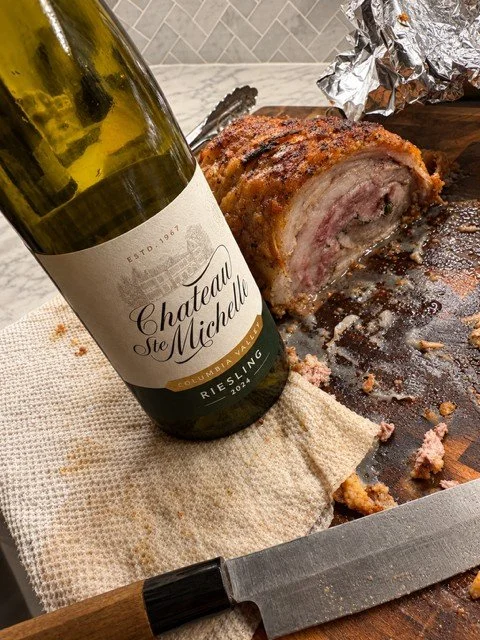
While on a boys weekend with some childhood friends, I made a porchetta. The host had stocked up on Gigondas (my very favorite Southern Rhône spot) and Châteauneuf-du-Pape, either of which—or both!—made perfect sense. Tannin to refresh our fat-laden palates post bite.
Earlier in the day, we popped into a store to pick up some ice. I spotted a Chateau Ste Michelle Riesling on the shelf. One of our group (Kevin, who also helped me wrestle the beast on and off the grill; not sure I could have managed without him!) had said that he likes Riesling, so that was an easy choice. As for me, despite the breathless adulation somms and writers continue to heap on it, I essentially tuned out years ago. Yes, I get that this grape is maybe the most site-sensitive of all the noble varieties, which in turn makes it maybe the most terroir influenced, and that’s a great thing. I’m not entirely sure why, but for me, I’m over it.
But I will always value wine/food-pairing strategies that are grounded in tradition. There is a reason that sangiovese-based wines love tomato sauce. That grape’s inherent leafy acidity matches that of one of the best New World transplants brought to the Old World.
Back to the porchetta. While it is an Italian preparation (many have said that it originated in Umbria, which makes sense given that this region, the green heart of the boot and home to my maternal grandparents, is known for its porcine butchery), stuffing and rolling pork belly isn’t unique to it.
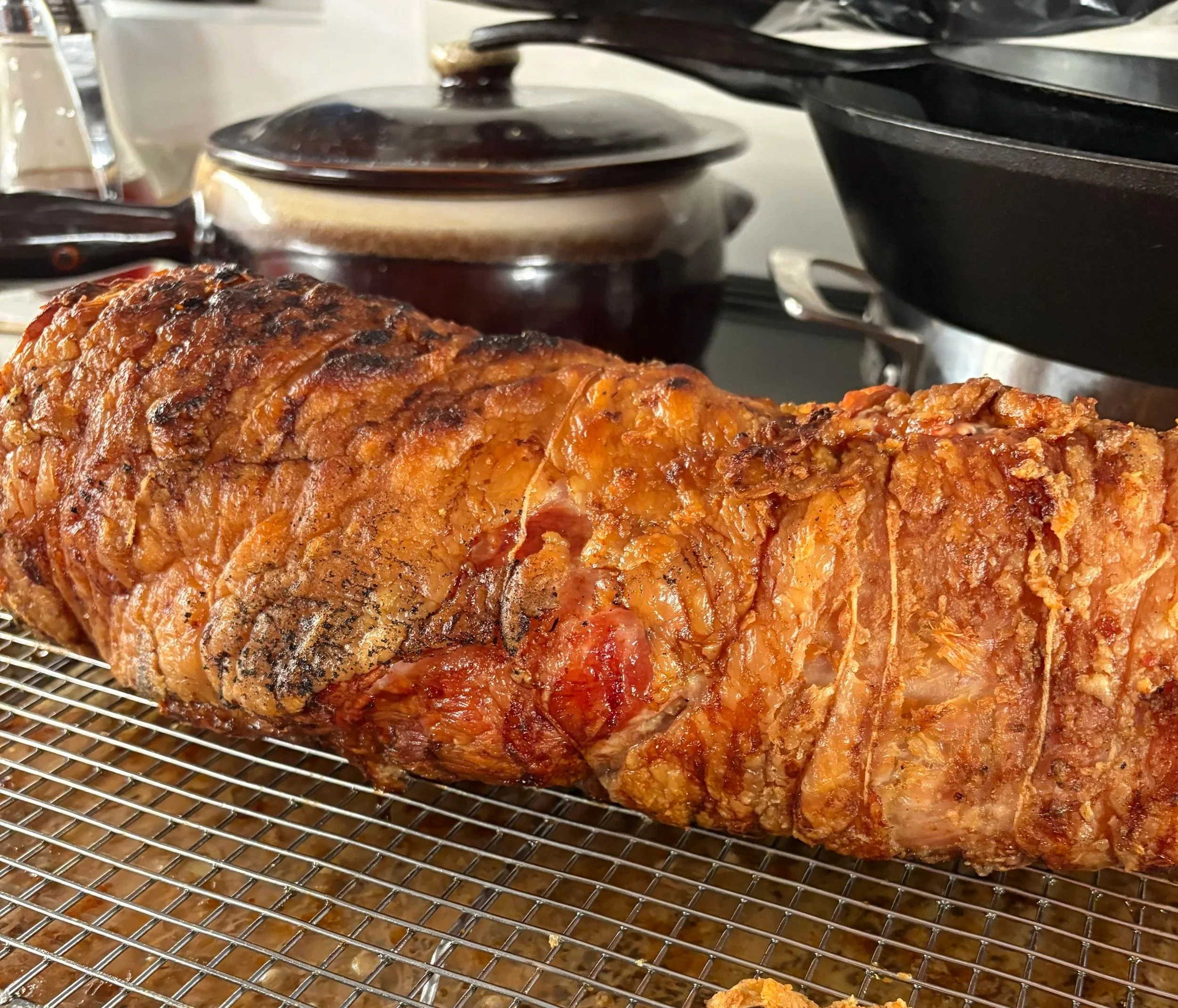
Pairing-wise, most of us probably would default to something red but not too big. If you asked me for a suggestion, I’d maybe go with a Pinot Noir from basically anywhere. Or maybe a Beaujolais or a Malbec. Really, pretty much anything would work as long as it’s not too tannic because your mouth doesn’t require as much refreshing as it does with red meat.
Why This White Works With This Protein
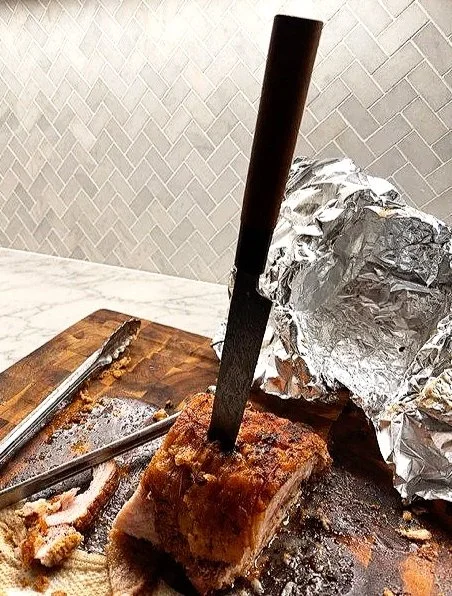
In Germany and adjacent German-speaking places (Trentino-Alto Adige in Italy’s northeast, Austria and parts of Switzerland), Riesling has long been the wine choice for many pork dishes. It makes a lot of sense. Regardless of the preparation or saucing, at the end of the day, pork has an intrinsic sweetness to it in a way that red meats don’t. Chicken doesn’t have that element either.
Riesling, no matter its residual sugar level, has a fruit-forward profile that really can’t be vinified away. Fruit=sweetness to some degree, not a sugary sweetness, but that sweetness you get from taking a bite of a juicy berry or whatever. And that’s why this pairing works. Two similar levels of sweetness seamlessly coming together.
The Riesling
I’ve had my share of Ste Michelle wines, especially, or really, exclusively, back in my wine writing days. I totally respect Ste Michelle’s role in the development of the Washington wine scene. There are definitely some parallels to the imprint of Mondavi on California, make that wine in the United States. Ste Michelle was at the vanguard of the drying up of Washington wine. While there has always been a lot of wine made there, much of it was off-dry and other non-grape wines. In fairness, that’s what the people wanted or at least we thought we did. Anyway, Ste Michelle makes it all. From entry level to high-end single vineyard. If you’re looking to dabble there, you’d do well to pick up a mixed half case of those wines.
So, back to the Riesling, it was a 2024 Columbia Valley, which is probably one of Ste Michelle’s best sellers. It was exactly what it should be. Dry, but with ripe enough fruit to act softer in a good way. It was aromatic and had none of the petrol that is often associated with this varietal. (Note: If anyone out there can explain why some have this and some don’t, I’m all ears. I've never heard an explanation that was convincing). With the porchetta, it was both a refresher and a seamless partner. Thanks, Kev! Great recommendation.